
Backyard Tree Removal in Meridian: What Happens When Equipment Cannot Reach the Tree?
A backyard tree may still be removable when a truck or large machine cannot reach the trunk. Depending on the property, a crew may use climbing and rigging, a lift, suitable smaller equipment, crane support, or a combination of methods. The safest choice depends on the tree, access route, ground conditions, nearby structures, and where each section can be controlled.
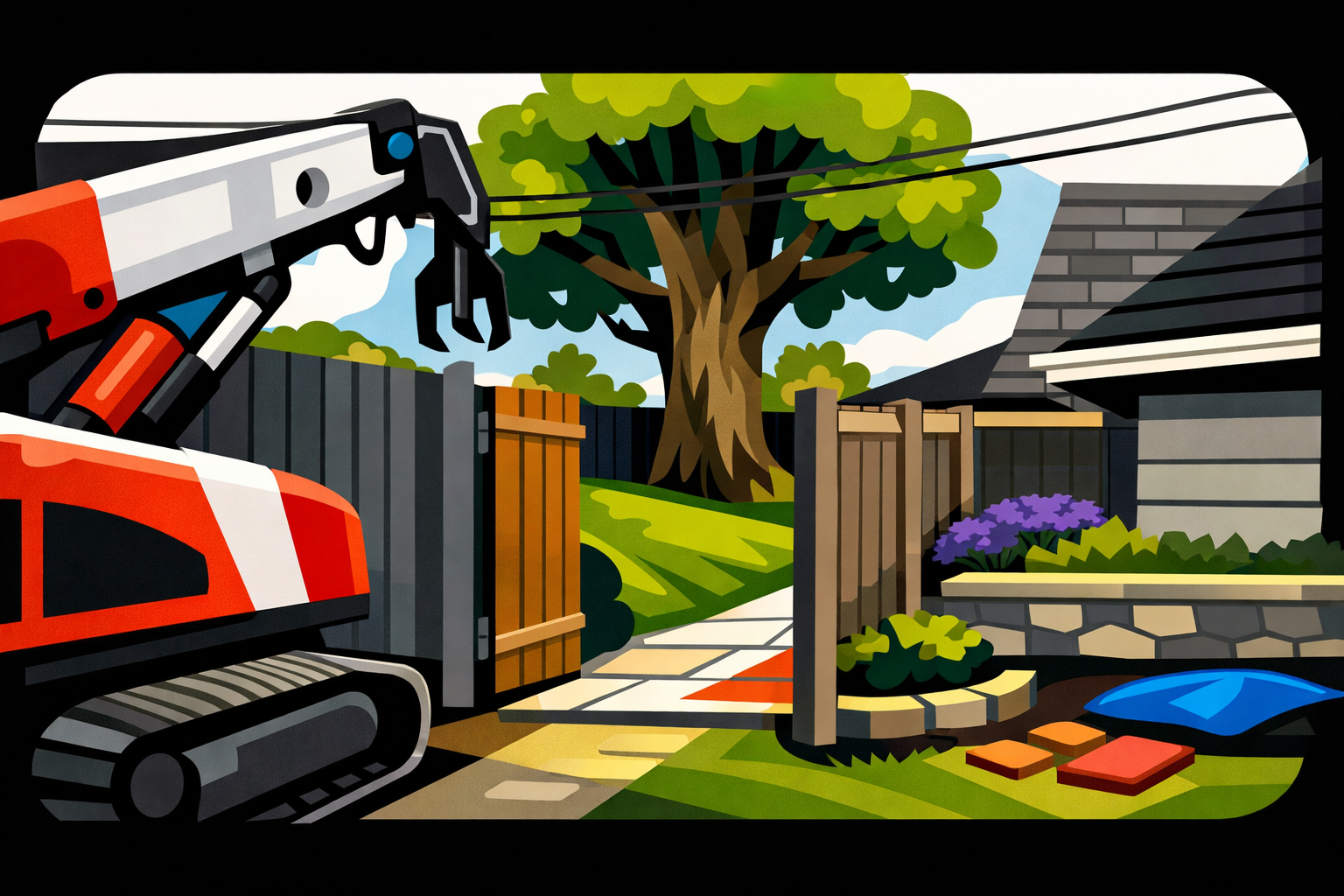
For Meridian homeowners, the first step is an on-site assessment. The crew should explain how the tree will be dismantled, how branches and trunk sections will be lowered or moved, what property needs protection, and which services are included in the quote. 2 Rivers Tree & Hardscapes can evaluate the site before confirming a removal approach.
How a Crew Evaluates a Hard-to-Reach Backyard Tree
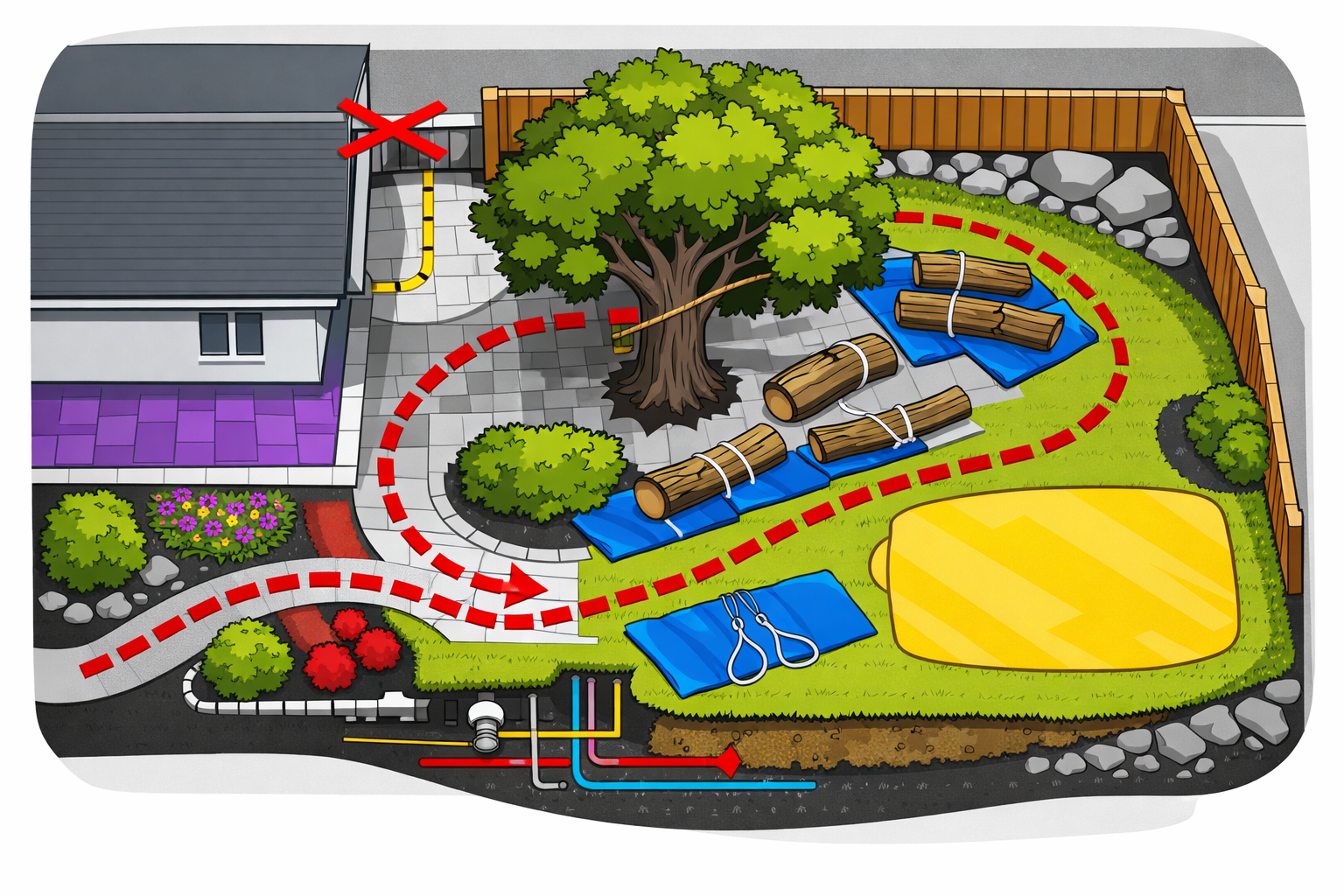
Limited access affects the removal plan before any cutting begins. A crew may inspect the narrowest gate, side-yard route, fences, patios, roofs, driveways, irrigation, landscaping, slopes, soil, and overhead lines. The team also needs safe positions for workers, ropes, lifts, or other equipment.
Photos from several angles and a gate measurement can help with an initial conversation, but they cannot replace an in-person assessment. A tree that looks reachable from the street may have no safe place to position equipment or lower heavy sections.
Measure the Route and Inspect the Ground
Measure the narrowest opening rather than just the main gate. Note steps, retaining walls, low branches, sharp turns, soft lawn, and slopes. Equipment may fit through an opening but still lack the room or ground support needed to operate safely. Protecting grass, paving, or garden beds may also require a different work sequence.
Stump access is a separate question. The company states that its stump grinders fit through 36-inch gates, but location, utilities, and terrain can limit grinding. Tree-removal access does not automatically guarantee stump-grinding access.
Map Hazards and Landing Areas
The tree’s condition matters as much as its location. Dead, storm-damaged, leaning, or structurally weak trees may require a more controlled plan. Branches over a roof, driveway, fence, or neighboring structure can limit where pieces may go. Overhead lines must be treated as a serious hazard, not simply another obstruction.
Ask where branches and trunk sections will be placed after cutting. A workable plan needs a landing area, a route for moving debris, and a way to keep workers and property outside the drop zone.
Clarify What Needs Protection
Before work begins, point out features you want protected, such as a roof, irrigation system, garden beds, decorative paving, fence, or vehicle access. This does not guarantee that every surface will remain untouched in a confined yard, but it gives the crew useful planning information.
The scope should state whether removal, cleanup, hauling, lift or crane support, and stump grinding are included. This makes it easier to compare plans that use different equipment or require different amounts of labor.
Removal Options When Equipment Cannot Enter
After the assessment, the crew can compare removal methods. There is no universal solution for every Meridian backyard. The tree may be dismantled from the canopy, reached with a lift, handled with suitable smaller equipment, or supported by a crane positioned outside the yard. The right plan balances control, safety, property impact, and cost.
Climbing and Rigging
When a machine cannot reach the trunk, trained climbers may work from the tree and lower branches or trunk sections with rigging. This can be useful in a narrow yard because pieces are guided instead of simply dropped. It may reduce heavy equipment traffic across the lawn, but it requires careful anchor planning and can take more time.
2 Rivers Tree & Hardscapes describes spurless climbing techniques and professional rigging for difficult removals. Climbing is not suitable for every tree. Decay, storm damage, instability, weather, and the tree’s structure must be evaluated first.
Lifts, Smaller Equipment, and Combined Plans
A lift may provide access to parts of the canopy while keeping workers positioned away from some hazards. The company identifies a Leguan lift among its professional equipment. Smaller equipment may also be considered when the route, ground, and operating area allow it; the specific choice requires a site assessment.
A combined plan could use a lift for canopy access, ropes for lowering, and ground equipment for brush and log handling. This may improve control, although moving equipment through a side yard can still affect soil, lawn, paving, or landscaping.
When Crane Support May Help
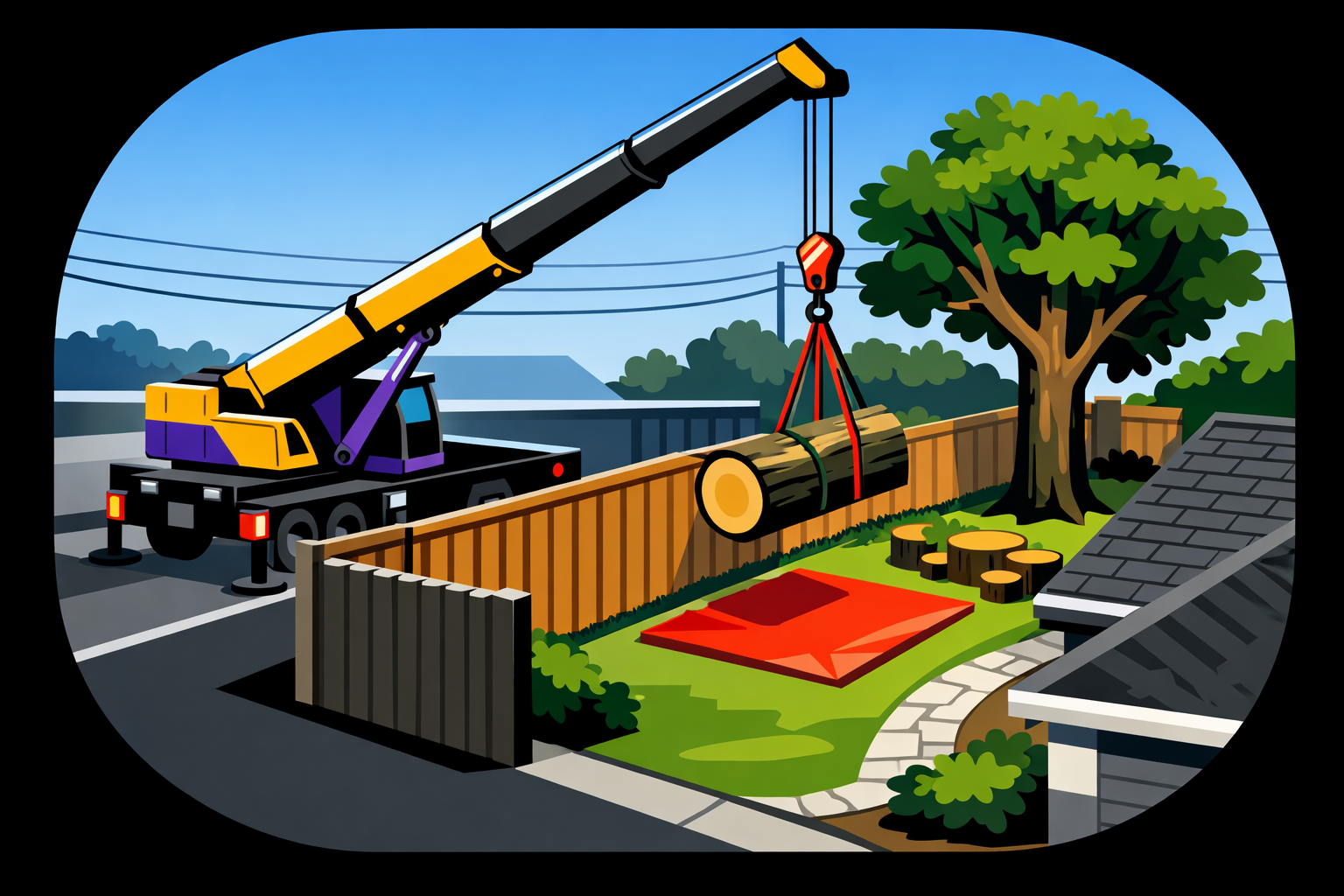
A crane can sometimes lift large sections over a fence or structure and place them in a designated landing area. This may make sense for a large tree in a tight backyard, a tree over a home, or a removal where lowering every section through the yard creates greater risk. The company’s Crane Work service describes crane-assisted removal for difficult-access properties throughout the Treasure Valley, including Meridian.
Crane work is not automatically cheaper or possible on every property. The crane needs a suitable setup location, enough reach, a clear load path, and a safe lifting plan. Ask why it is recommended and what setup, access, and cleanup requirements it adds.
Backyard Tree Removal Access FAQ
Can a tree be removed if no truck can enter my backyard?
Possibly. Climbing and rigging, a lift, suitable smaller equipment, crane support, or a combination may work, depending on the tree, access route, ground, hazards, and nearby structures.
Will a narrow gate prevent stump grinding too?
Not necessarily. 2 Rivers Tree & Hardscapes states that its stump grinders fit through 36-inch gates, but utilities, terrain, location, and grinding requirements can affect what is possible.
Is crane removal always best for a tight backyard?
No. A crane needs a safe setup location, adequate reach, and a suitable lifting plan. Climbing, rigging, a lift, or a combined approach may be more practical.
Can photos provide an accurate removal price?
Photos can help with an initial discussion, but a site-specific quote requires assessing the tree, access, hazards, equipment, cleanup, and any stump work.
What should I prepare before the assessment?
Measure the narrowest gate or route, take photos from several angles, and note roofs, fences, irrigation, slopes, landscaping, paving, and overhead lines.