
How to Protect Fences, Driveways, and Landscaping During Tree Removal
The safest way to protect fences, driveways, and landscaping during tree removal is to plan the site before cutting begins. A professional crew should inspect access routes, identify fragile surfaces and underground features, choose controlled removal methods, and explain how debris will be handled. That planning matters whether the tree is in an open yard or close to a home, fence, driveway, patio, irrigation system, or garden bed.
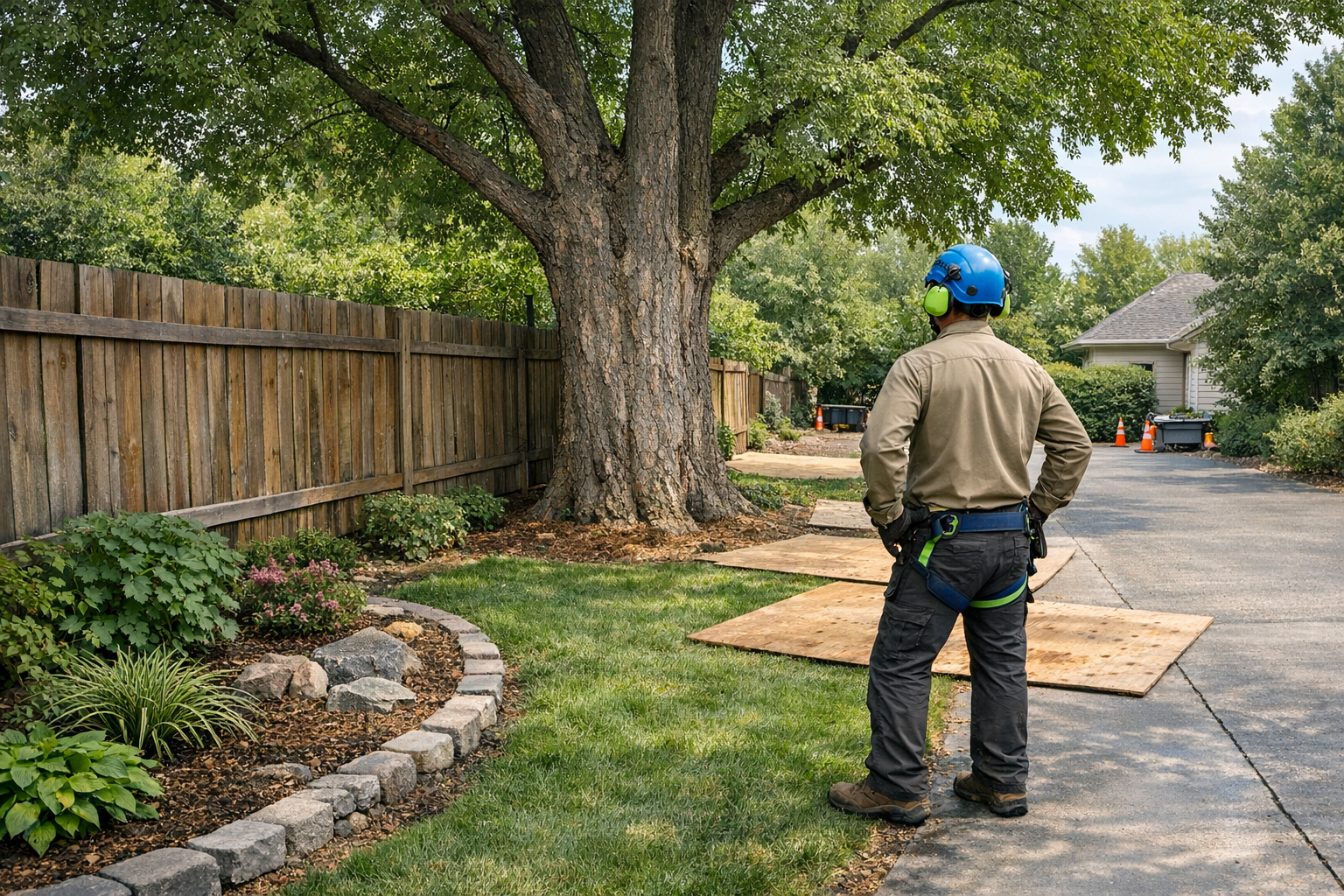
At 2 Rivers Tree & Hardscapes, tree removal planning starts with the tree and the property around it. The right approach may involve climbing and rigging, a lift, specialized equipment, or crane support, depending on the tree, access, ground conditions, and where each section can be safely controlled. Here is what to discuss before work begins and what to watch for during cleanup.
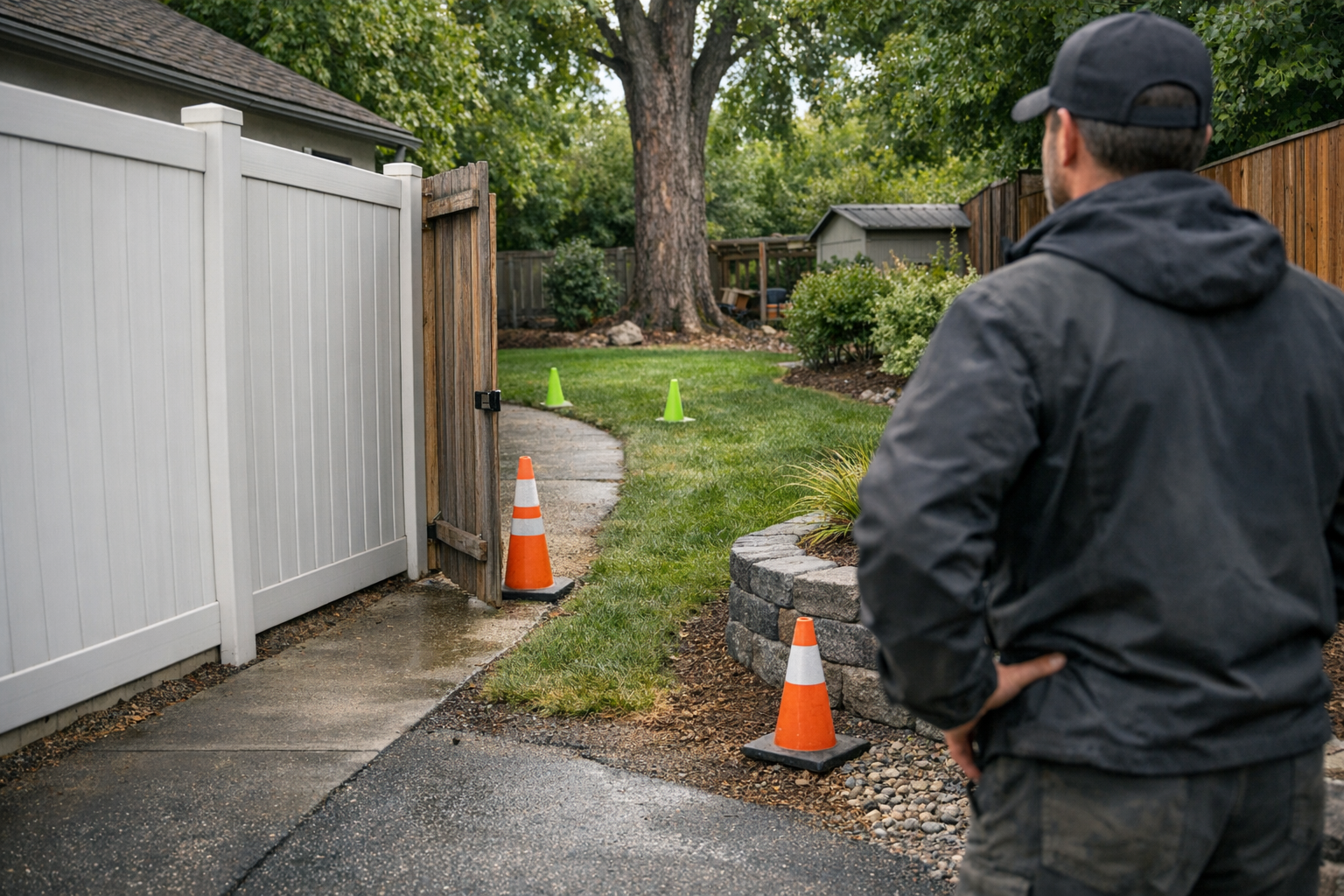
Plan the property before the first cut
Property protection should be part of the removal plan from the start. Walk the site with the tree service and point out the features that matter most, including fence panels, gates, paving, retaining walls, ornamental plants, raised beds, outdoor structures, sprinkler heads, and areas where heavy equipment should not travel. Ask the crew which parts of the property could be affected and how the plan will reduce that risk.
A site walk turns general promises into specific decisions. It also gives you a chance to document existing conditions with photos. Pictures are not a substitute for a professional assessment, but they can help clarify the condition of a fence, driveway edge, lawn, or landscape feature before work starts.
Map access routes and fragile surfaces
Start with the route from the street or equipment staging area to the tree. Measure narrow gates and note sharp turns, steps, slopes, low branches, soft ground, retaining walls, and overhead obstacles. A route that looks wide enough for a person may not suit a lift, chipper, truck, or other equipment. The crew should decide where equipment can be positioned and which areas should remain off-limits.
Driveways deserve special attention. Discuss whether equipment can remain on the driveway, where vehicles will park, and how the surface will be kept clear of wood, dirt, and chips. A crew may choose a different removal method or staging area when access over a lawn or paved surface creates unnecessary risk. The answer depends on the property, so do not assume a standard setup will work everywhere.
Identify irrigation, utilities, and hidden obstacles
Before work begins, identify visible irrigation lines, sprinkler heads, landscape lighting, drainage features, septic components, utility boxes, and buried or surface-mounted cables. Mark features that are easy to miss under grass, mulch, or leaves. Underground utilities and private irrigation systems may require information from the property owner or the appropriate utility-locating process. Ask who is responsible for confirming them and what the crew needs from you.
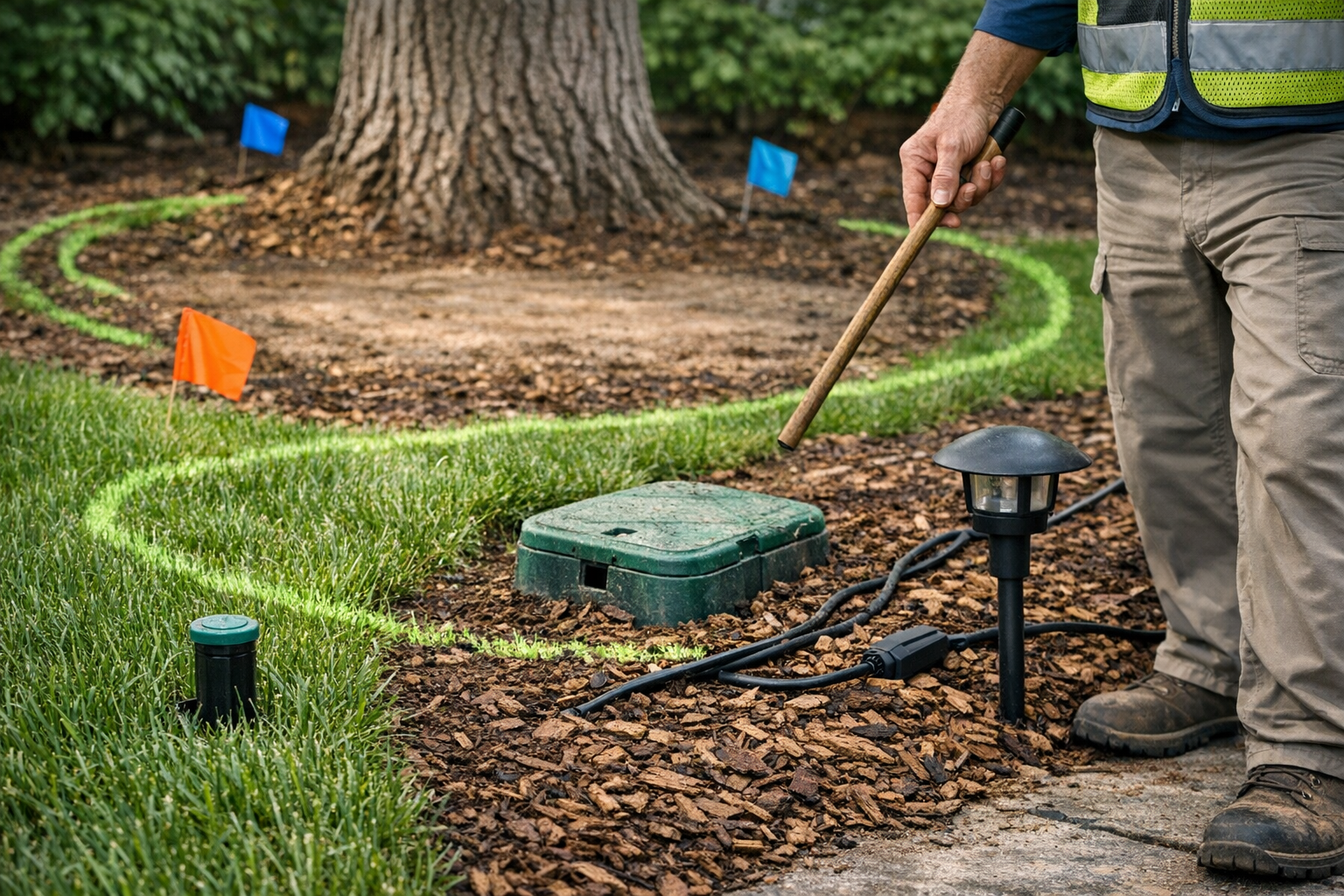
Do not move or disconnect utilities yourself unless the responsible provider instructs you to do so. Instead, ask the tree service what information is needed before equipment arrives. This is especially important when stump grinding is included because the stump area may have different access and utility concerns than the tree removal itself.
Match the removal method to the surroundings
The removal method should reflect what is around the tree, not just its size. Sections may need to be lowered with ropes rather than dropped. A lift or crane may be considered when climbing access is difficult or controlled movement can reduce exposure to nearby structures. Crane work is not appropriate for every property; it requires a suitable setup location, adequate reach, and a plan for lifting and placing sections.
2 Rivers Tree & Hardscapes provides crane tree removal for difficult removals, including trees near homes, garages, fences, driveways, and commercial buildings. Ask how the proposed equipment changes the work area, where it will sit, what it will lift, and how the plan protects nearby surfaces and landscaping.
Control the work area and verify the cleanup
Once the plan is set, protection depends on disciplined worksite control. Keep people, pets, vehicles, and unnecessary items away from the removal area. The crew should establish an exclusion zone and communicate where no one should stand or walk while limbs and trunk sections are cut, lowered, moved, or loaded. Do not enter the area unless the crew says it is safe.
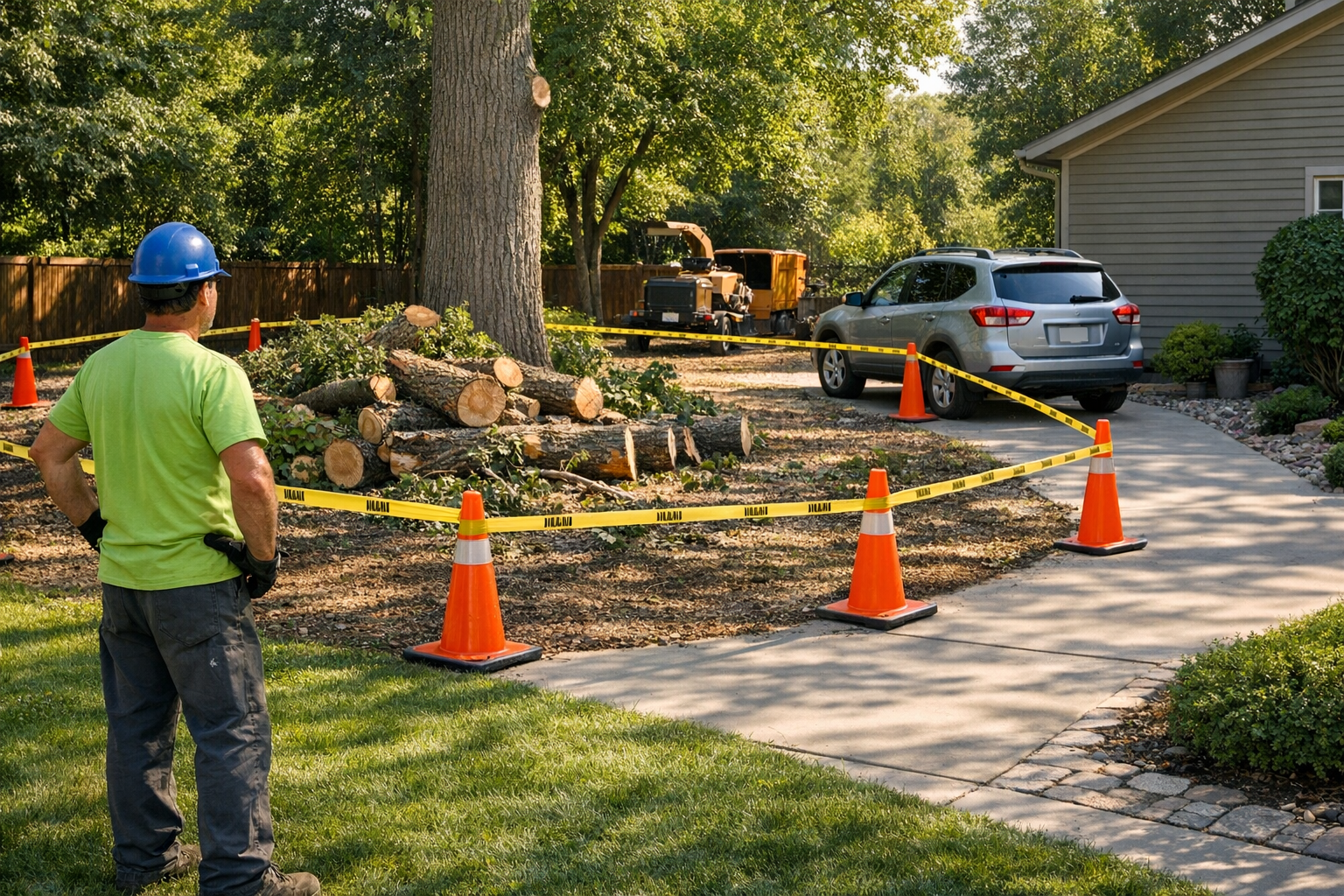
During the job, watch for changes in ground conditions, wind, access, or the tree itself. A plan may need to change when a section is heavier than expected, a route becomes unsafe, or equipment cannot be positioned as intended. Pausing to reassess is better than forcing the original method.
Protect lawns, beds, and hard surfaces
Ground protection should be considered wherever workers, equipment, logs, or branches may travel. Ask how the crew plans to limit contact with lawns, planting beds, patios, walkways, and driveway edges. The plan might involve changing the staging area, controlling movement, using smaller equipment, or lowering sections rather than allowing them to fall.
Protection does not mean every lawn or surface will look untouched after a large removal. Wet, soft, sloped, or confined sites can create tradeoffs. Ask which impacts are reasonably avoidable, which areas need special care, and whether weather or soil conditions could change the plan. Identify any garden bed, young tree, or hardscape feature that needs extra care before work begins.
Keep fences and gates from becoming collateral damage
Fences often sit directly along the tree’s working area, so they should be included in the removal sequence. Ask whether branches or trunk sections will be lowered, carried, or moved near the fence, and whether any gate must remain open for equipment or hauling. A narrow side yard may require a different approach from an open front yard.
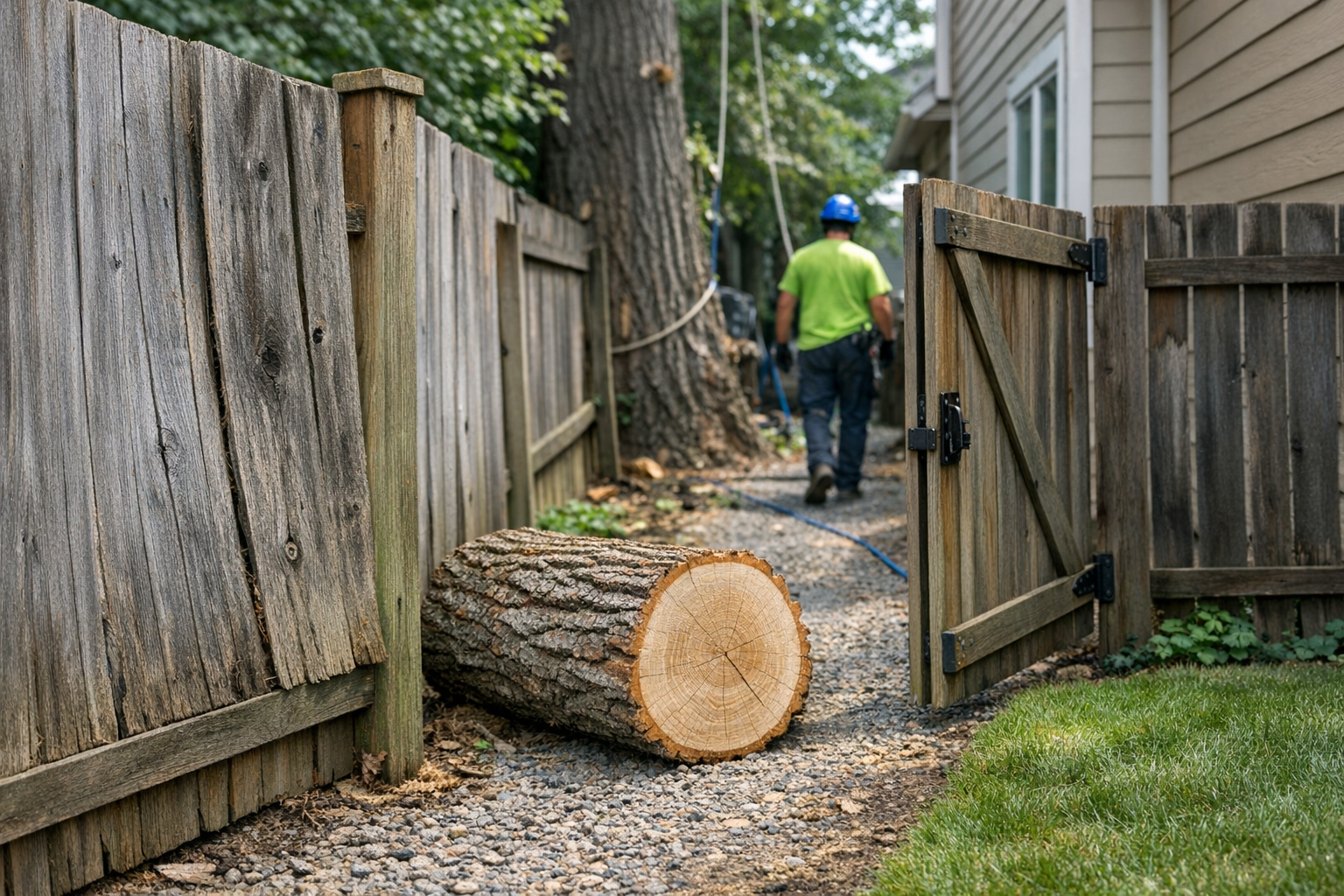
If a fence panel, gate, or post is already leaning or damaged, point that out during the site walk and record it in the written scope or job notes. This creates a shared understanding of the starting condition and helps the crew plan movement and equipment access around the fragile section.
Confirm debris handling, stump work, and final inspection
Before scheduling, make sure the scope explains what happens to branches, logs, chips, and other debris. Tree removal, hauling, cleanup, and stump grinding may be separate parts of the project. Ask whether the crew will rake or blow the work area, whether chips remain, and what level of cleanup is included. If stump grinding is planned, confirm the location, expected grinding area, and how the area will be left afterward.
2 Rivers Tree & Hardscapes explains that stump grinding limitations can depend on location, utilities, and terrain. Its stump grinding service also describes grinding and cleanup options to discuss in the estimate. After removal, walk the site with the crew if possible. Check fences and gates, driveway edges, lawn access points, planting beds, irrigation markers, and agreed debris areas before the job is complete.
Put the protection plan in writing
A clear written scope should identify the tree or trees being removed, the planned removal method when known, access and staging areas, debris and hauling responsibilities, stump work, cleanup, and property features that need special care. It should also note questions requiring confirmation, such as utility locating, permits, shared fences, or access across another property.
For example, imagine a dead tree between a driveway and a backyard fence, with irrigation lines crossing the lawn. A useful scope would not merely say “remove tree and clean up.” It would describe where equipment may stage, how sections will be controlled, who will verify the irrigation route, whether the stump is included, and what cleanup the homeowner should expect. That detail makes quotes easier to compare and reduces surprises.
If the tree is unstable, storm-damaged, or close to a structure, do not delay professional advice while trying to create the plan yourself. 2 Rivers Tree & Hardscapes offers hazardous tree removal and can assess a property before confirming the safest approach. For routine work, you can also review the broader Tree Removal service information to see which site details to discuss during an estimate.
Tree Removal Property Protection FAQ
What should I show the tree removal crew before work begins?
Show the crew fences, gates, driveway edges, lawns, planting beds, irrigation features, utility boxes, outdoor structures, and any surface or landscape feature you want treated carefully. Also identify narrow routes, soft ground, slopes, and existing damage. Photos can document conditions, but an on-site assessment is still needed.
Can tree removal equipment damage my driveway or lawn?
Equipment and moving wood can affect surfaces, especially where ground is soft, sloped, or confined. Ask where equipment will stage, which routes it will use, and what steps will limit contact with sensitive areas. The crew may change the equipment or removal method based on the site and weather conditions.
How are branches and trunk sections kept away from fences and landscaping?
The crew may control sections with ropes, use suitable equipment, change the drop or staging area, or use crane support when the property and lifting plan allow it. Ask how each major section will be moved and what happens if the original route becomes unsafe. The exact method should be based on the tree and its surroundings.
Should irrigation and underground utilities be checked before tree removal?
Yes. Identify visible irrigation, lighting, utility boxes, drainage features, and other underground or surface obstacles before work begins. Ask who will confirm utility information and whether private irrigation needs to be marked by the property owner or another responsible party. This is also important before stump grinding.
Does tree removal include stump grinding and cleanup?
Not always. Tree removal, hauling, cleanup, and stump grinding can be separate scope items. Review the estimate to confirm whether the stump, chips, logs, branches, and final cleanup are included. Ask about grinding limitations related to location, utilities, and terrain.