
Why Utility Locates Matter Before Stump Grinding
Utility locates matter before stump grinding because a stump can sit directly above or near buried lines that are not visible from the surface. Grinding equipment cuts below ground, so a mistake can damage a utility, interrupt service, create a safety hazard, or turn a straightforward job into a much larger repair. A careful plan starts with identifying what may be underground before the grinder arrives.
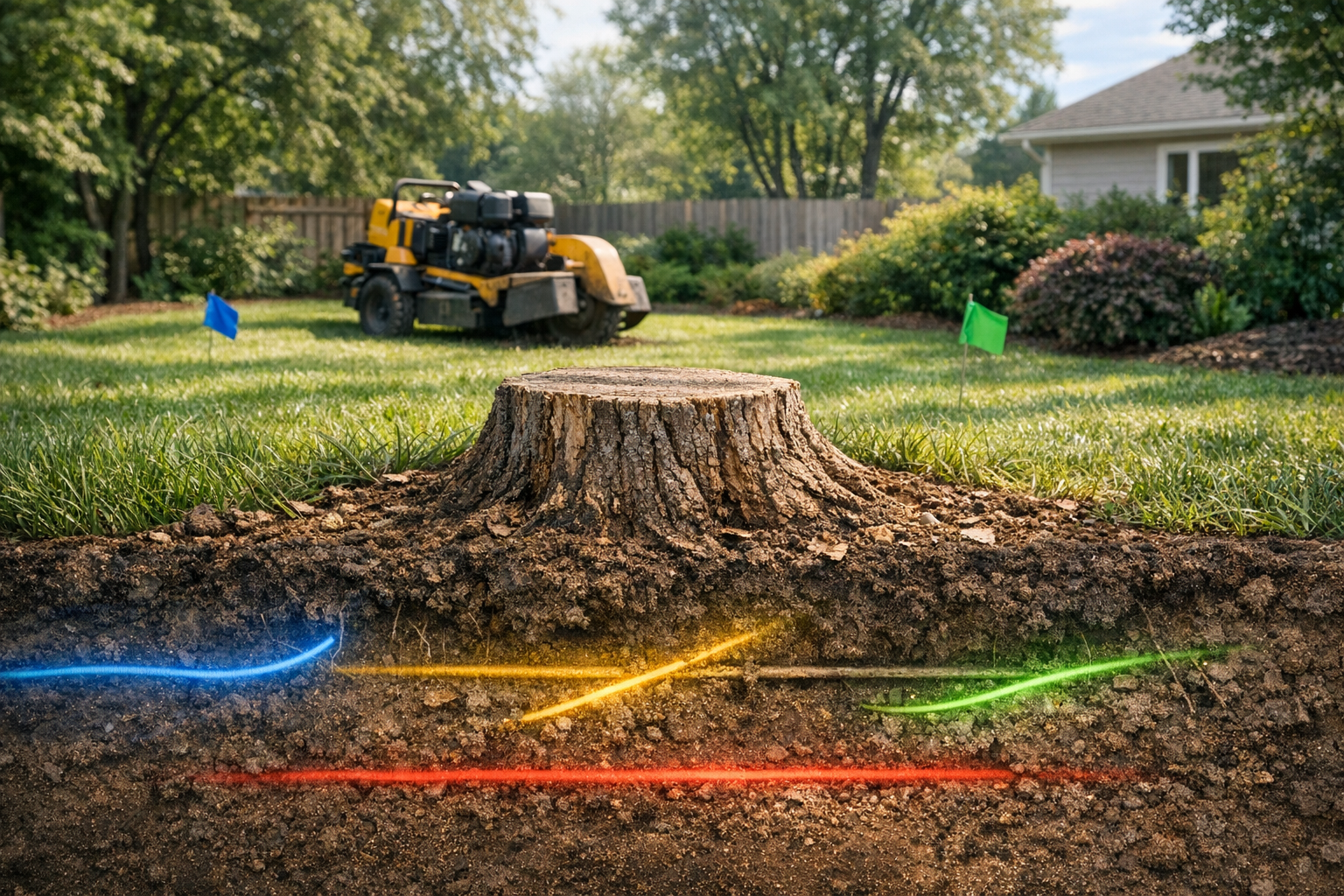
The important point is that one locate process may not identify every buried feature on your property. Public utility lines, private lines, irrigation, low-voltage wiring, drainage features, and other owner-installed items may involve different records or responsibilities. Before scheduling stump grinding in Boise or elsewhere in the Treasure Valley, ask what will be located, who is responsible for each feature, and what information the crew needs from you.
What a Utility Locate Can and Cannot Tell You
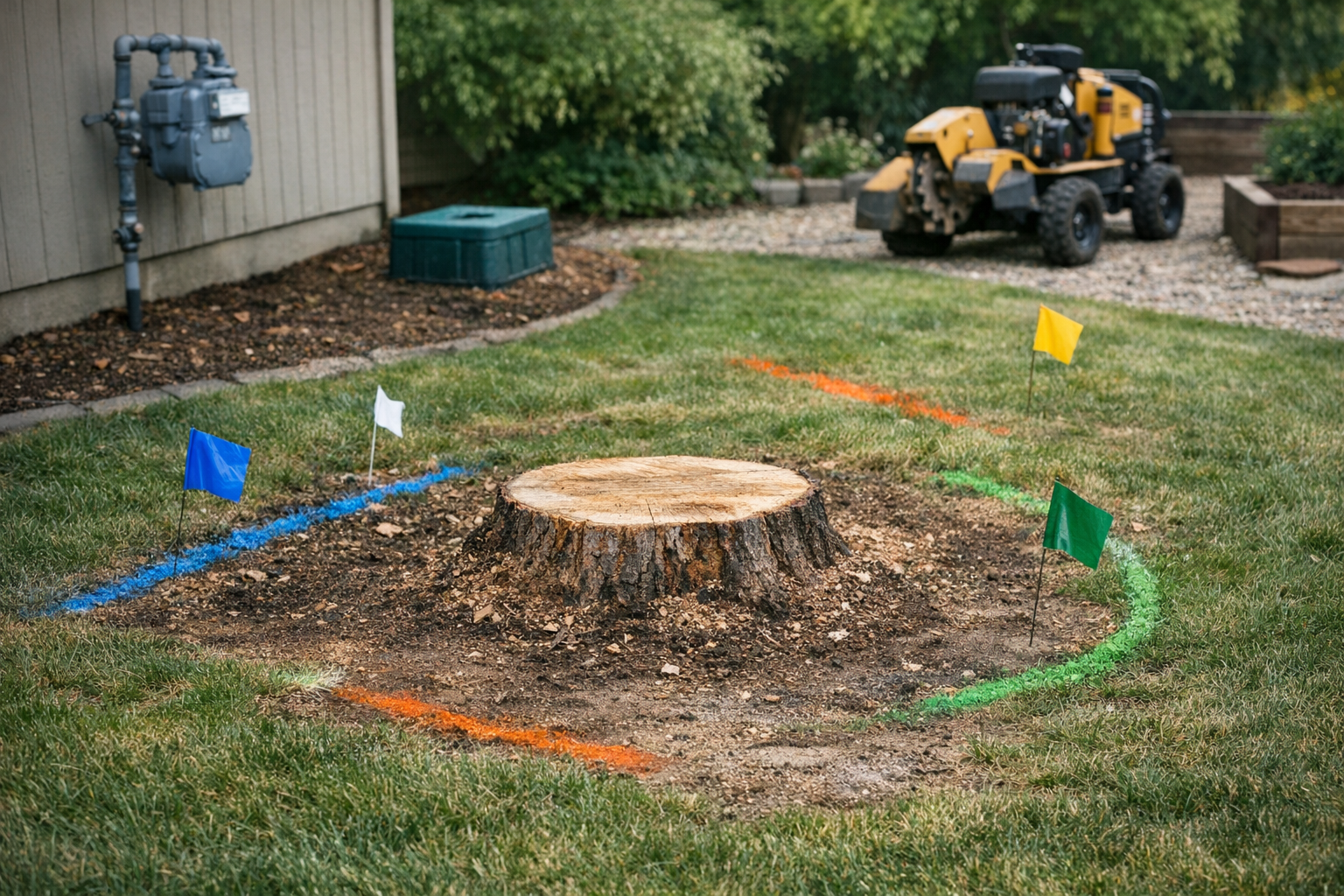
A utility locate is a way to identify and mark buried infrastructure before ground disturbance. For stump grinding, the goal is to understand what may be near the stump and whether the planned depth, equipment, and access route need to change. The marks are part of the work plan, not a guarantee that every underground object has been found.
The exact process depends on the property, the utility involved, and whether the line is part of a public network or was installed for private use. That is why a responsible tree service should verify the locating process for the specific site instead of treating every stump the same. If marks are missing, unclear, or inconsistent with what you know about the property, pause and ask questions before grinding begins.
Public lines are only one part of the picture
Public utility locating generally focuses on lines operated by utilities or other service providers. Those lines may serve the home from a larger network, but coverage and responsibility can change once a line reaches private property or crosses an area installed by a homeowner, contractor, or previous owner. Do not assume that a public mark covers every line running to a detached garage, outbuilding, landscape feature, or private system.
A good pre-work conversation should identify which locating service will be used and what its markings represent. Ask whether the stump area is included, whether the marks will remain visible on the scheduled workday, and what happens if a line is shown close to the grinding area. The answer may be a different grinding plan, additional owner-provided information, or a request for a separate private locate.
Private lines and irrigation need extra attention
Private utilities are a common reason a property owner may need to provide information beyond standard utility marks. Examples can include privately installed electrical runs, gas or water lines, irrigation controls, landscape lighting, invisible pet-fence wiring, and other features added after the property was built. This list is not a promise that every feature exists or that a particular locating service covers it; it is a reminder to discuss anything you know or suspect is underground.
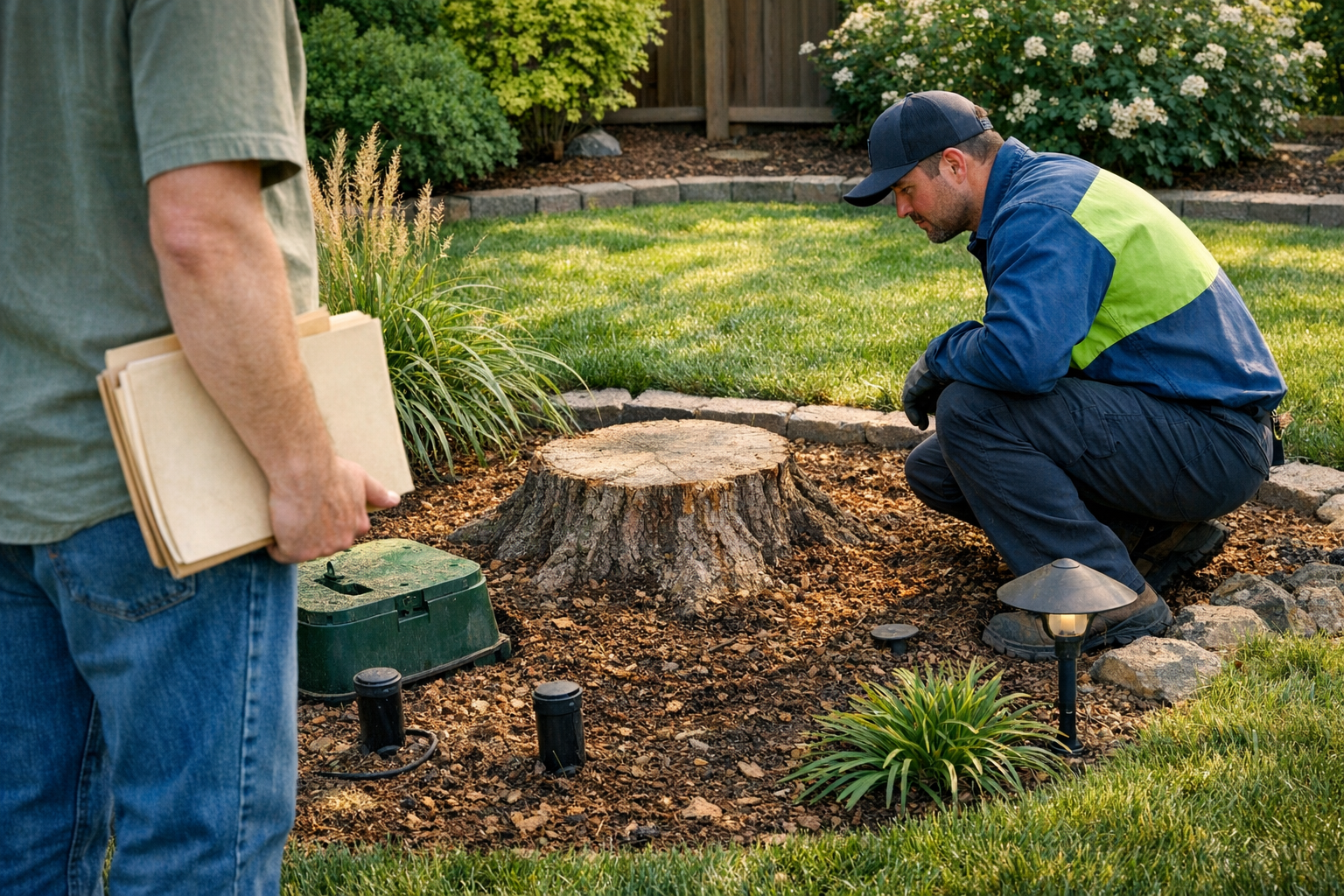
Irrigation deserves special attention around former trees because sprinkler lines may run through planting beds, lawns, or near the trunk. Share any maps, installation records, photographs, contractor information, or details about valves and control boxes with the tree service. Do not dig around the stump yourself to search for a line. Give the crew the information you have and ask how the suspected feature will affect the work plan.
Marks are useful evidence, not permission to ignore the site
Paint or flags can show where a line is believed to run, but the marks still need to be compared with the physical property. Look for nearby meters, cleanouts, irrigation boxes, control panels, outdoor outlets, lighting fixtures, and service routes. Tell the crew about any feature that does not seem to match the marks. A narrow marked area does not automatically mean the entire stump and root zone are clear.
Terrain, access, and the stump’s position can also affect the plan. The stump-grinding service from 2 Rivers Tree & Hardscapes notes that grinding limitations depend on location, utilities, and terrain. Its equipment can fit through 36-inch gates, but gate access alone does not establish that the grinding area is safe or fully clear underground.
How to Prepare for a Safer Stump-Grinding Visit
You do not need to create a technical site plan before requesting an estimate. You do need to share what you know and confirm the responsibilities that apply to your property. A short, specific conversation can prevent confusion about the locate process, grinding depth, cleanup, and what happens if underground information is incomplete. If you are unsure, ask the tree service to assess the stump and explain the next step rather than guessing.
Start with a site history and visible clues
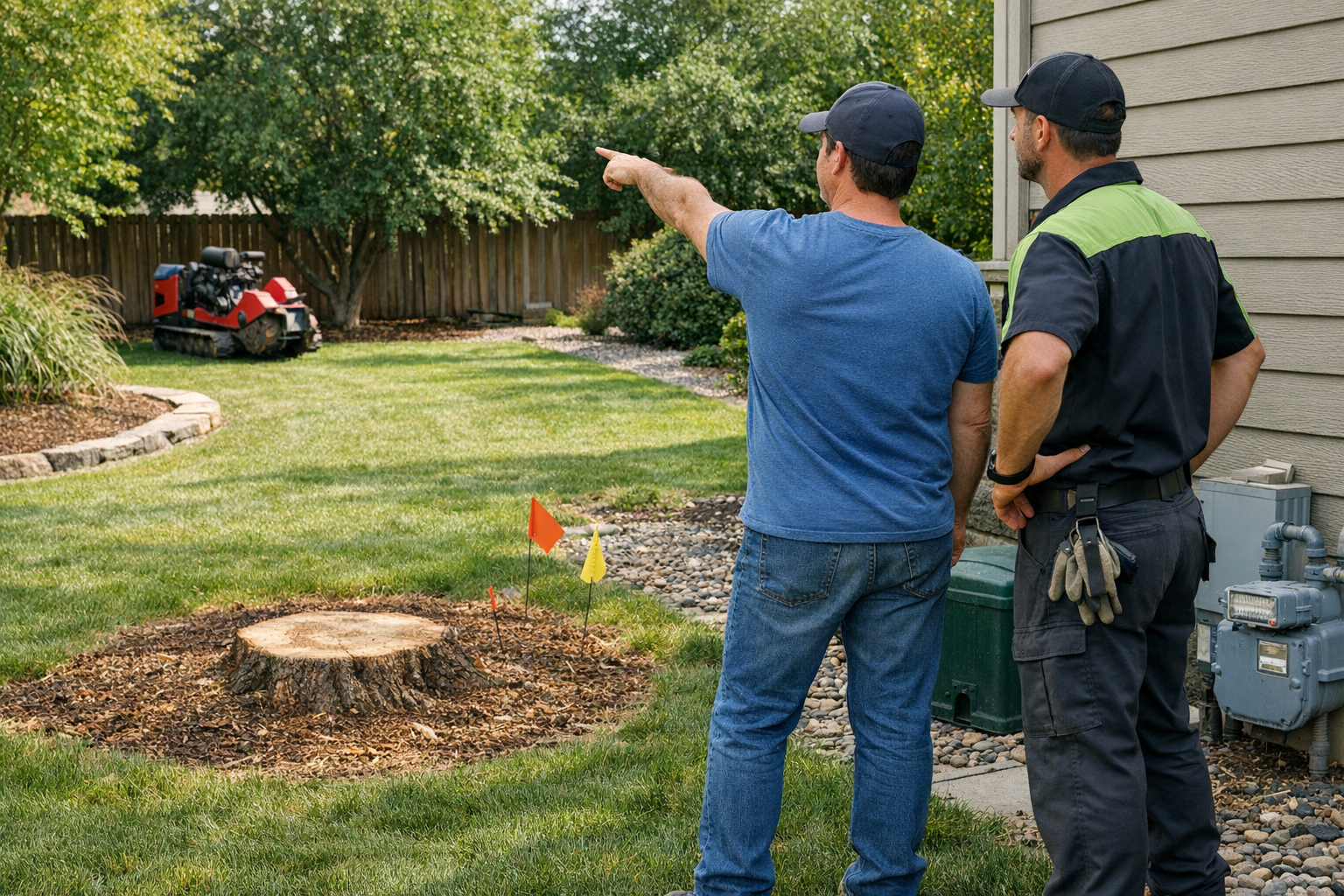
Before the visit, think about what used to be near the tree. Was there an old irrigation system, landscape lighting, a shed, pool equipment, a hot tub, a detached structure, or a previous landscaping project nearby? Ask previous owners, property managers, contractors, or irrigation companies for records when those records are available. Even a rough description can help the crew identify a question that needs to be resolved.
Walk the area without moving soil or removing marks. Note meters, valves, outdoor outlets, drain structures, fence lines, and any route where a line may enter a building or cross the yard. Photographs of these features can help preserve the information for the estimate discussion. The goal is not to locate a line yourself. The goal is to make sure known information is not left out of the plan.
Confirm the locate scope before the grinder starts
Ask clear questions before work begins: Which utility-locating process is being used? What types of lines does it cover? Are private utilities and irrigation the property owner’s responsibility? Has the stump area been included? What should happen if marks are incomplete, damaged, or close to the stump? These questions help separate confirmed information from assumptions.
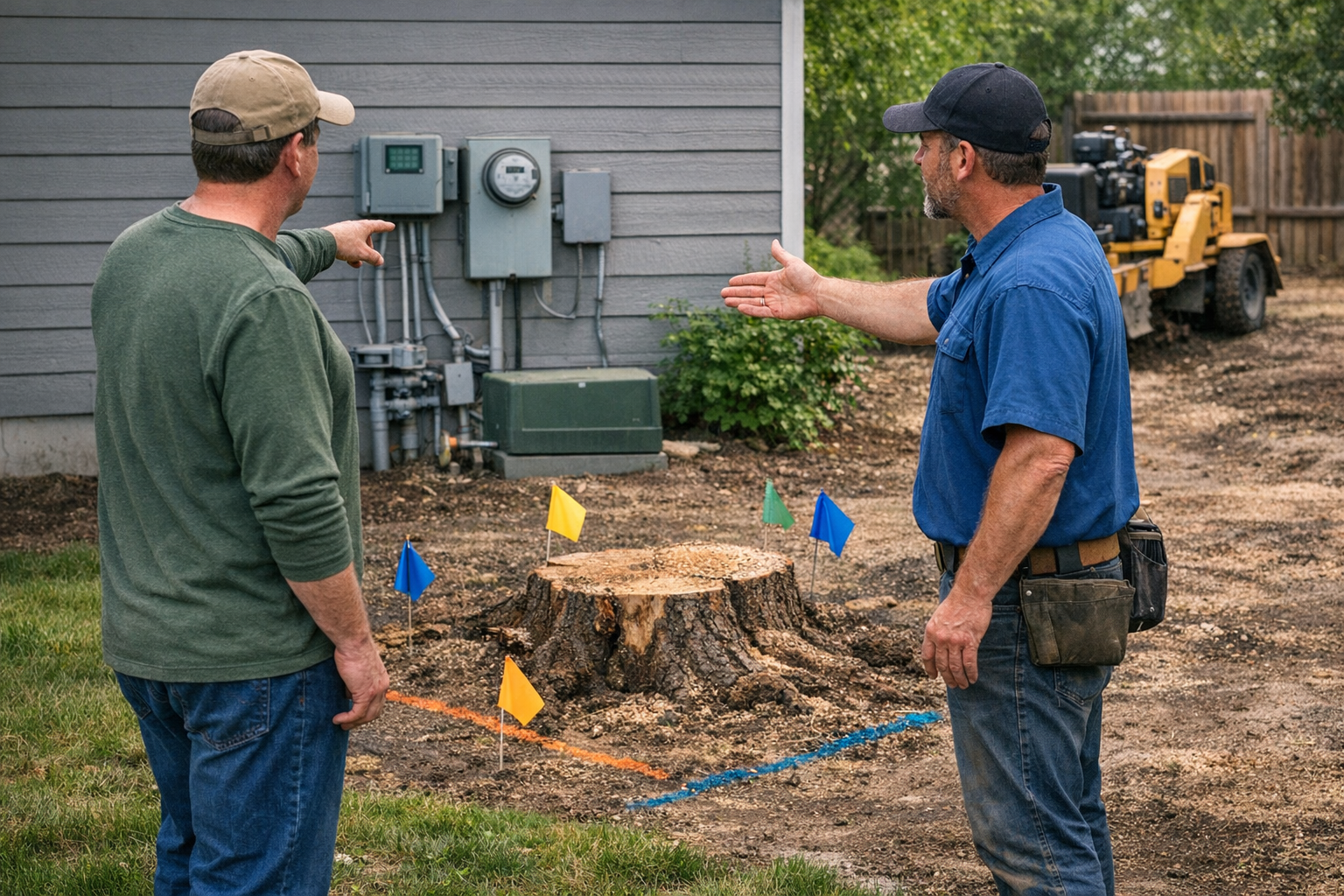
If the property has private lines, ask whether you need to arrange a private locating service or provide records before the job can proceed. The correct next step may vary by site, so do not rely on a generic promise that all utilities have been marked. A professional estimate should account for the actual location, utilities, terrain, access, and requested work rather than treating a locate as a box to check.
Decide what to do when information is incomplete
Sometimes records are missing, old marks have faded, or an owner is not sure where an irrigation or electrical line runs. That uncertainty should be stated plainly before grinding. Depending on the feature and its location, the plan may need additional verification, a change in grinding approach, a different depth, or a decision to leave part of the root area undisturbed. The important thing is to make that decision before the machine is operating.
For a hypothetical example, imagine a stump beside a patio where the homeowner remembers landscape lighting but cannot find the wiring map. The safest next step is not to assume the lights run somewhere else. The homeowner should tell the tree service, identify the visible fixtures and control box, and ask whether the wiring needs separate verification before work proceeds. That gives the crew useful information without pretending the line has been located.
Review the work scope and ask for professional help
Utility safety is one part of the stump-grinding decision. Also confirm the intended grinding depth, whether exposed roots are included, how chips and soil will be handled, and whether cleanup is part of the quote. 2 Rivers Tree & Hardscapes states that its stump-grinding quotes can include grinding and chasing roots up to two inches below the surface, with cleanup options. The appropriate scope still depends on the property and the plan for the space.
If you are planning stump grinding in Boise, Meridian, Nampa, Star, or another supported Treasure Valley community, ask for an assessment that addresses the stump, access, terrain, and underground concerns together. Contact 2 Rivers Tree & Hardscapes for a professional discussion of the site rather than trying to make a grinding decision from surface markings alone. Clear information before the visit helps the crew prepare and helps you understand what the estimate includes.
Utility Locate Questions Before Stump Grinding
Does a standard utility locate find every line near a stump?
No. The coverage depends on the locating process and the utility involved. Public lines may be handled differently from private electrical, water, gas, irrigation, landscape-lighting, or other owner-installed features. Ask the tree service what the locate covers and whether private lines require separate information or verification.
What should I tell the stump-grinding crew?
Share anything you know about irrigation, landscape lighting, buried electrical or water lines, detached structures, previous landscaping, meters, valves, control boxes, and old utility records. Do not dig to search for lines yourself. Give the crew the available information and ask how it affects the work plan.
What if utility marks are missing or close to the stump?
Pause before grinding and ask the tree service to verify the marks and the next step. The plan may require additional locating, owner-provided records, a change in grinding depth or method, or leaving part of the area undisturbed. Do not assume unclear marks mean the area is safe.
Should irrigation lines be discussed before stump grinding?
Yes. Irrigation lines can run through lawns and planting beds near a former tree, and they may not be covered by the same process as public utilities. Point out valves, control boxes, sprinkler heads, and any available irrigation map, then ask who is responsible for confirming the lines before work begins.
Does gate access prove a stump can be safely ground?
No. Equipment access is only one consideration. The stump-grinding service states that its grinders fit through 36-inch gates, but location, utilities, and terrain can still limit the work. The crew should assess the complete route and the underground conditions around the stump before confirming the plan.