
Can This Tree Be Saved? Questions to Ask During a Tree Health Assessment
A tree that looks unhealthy is not automatically a tree that needs to be removed. Declining leaves, dead branches, peeling bark, mushrooms near the base, cracks, or unusual growth can have different causes. The useful question is not simply, “Is this tree sick?” It is, “What is affecting the tree, how serious is it, and what choices are reasonable now?”
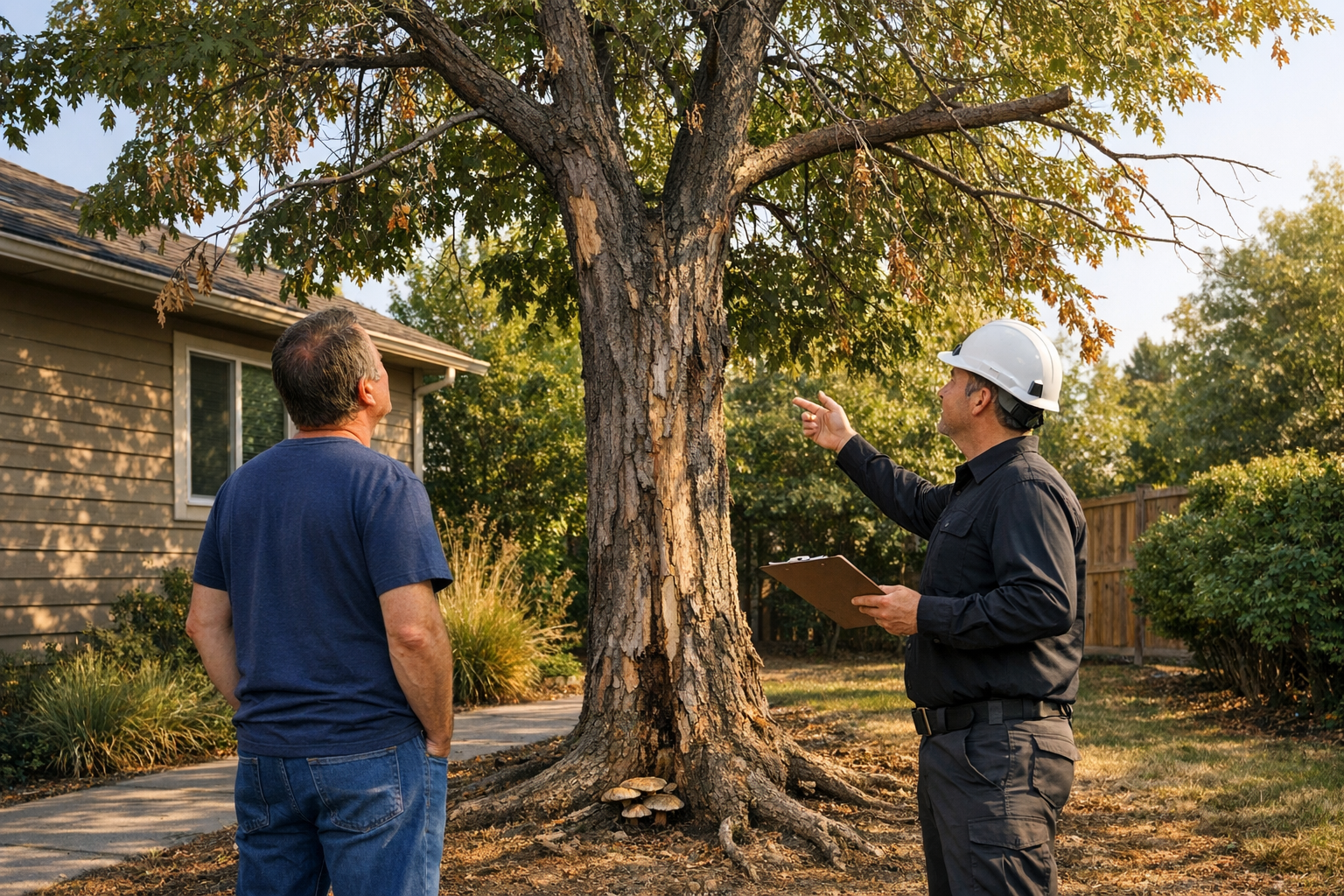
A professional assessment should help you understand whether the tree may remain in place with treatment, pruning, monitoring, or other care—or whether its condition and location create too much risk. When you meet with an arborist, ask for clear explanations and evidence you can use to make a decision. 2 Rivers Tree & Hardscapes provides tree health care and diagnostics for property owners in Boise and surrounding Treasure Valley communities.
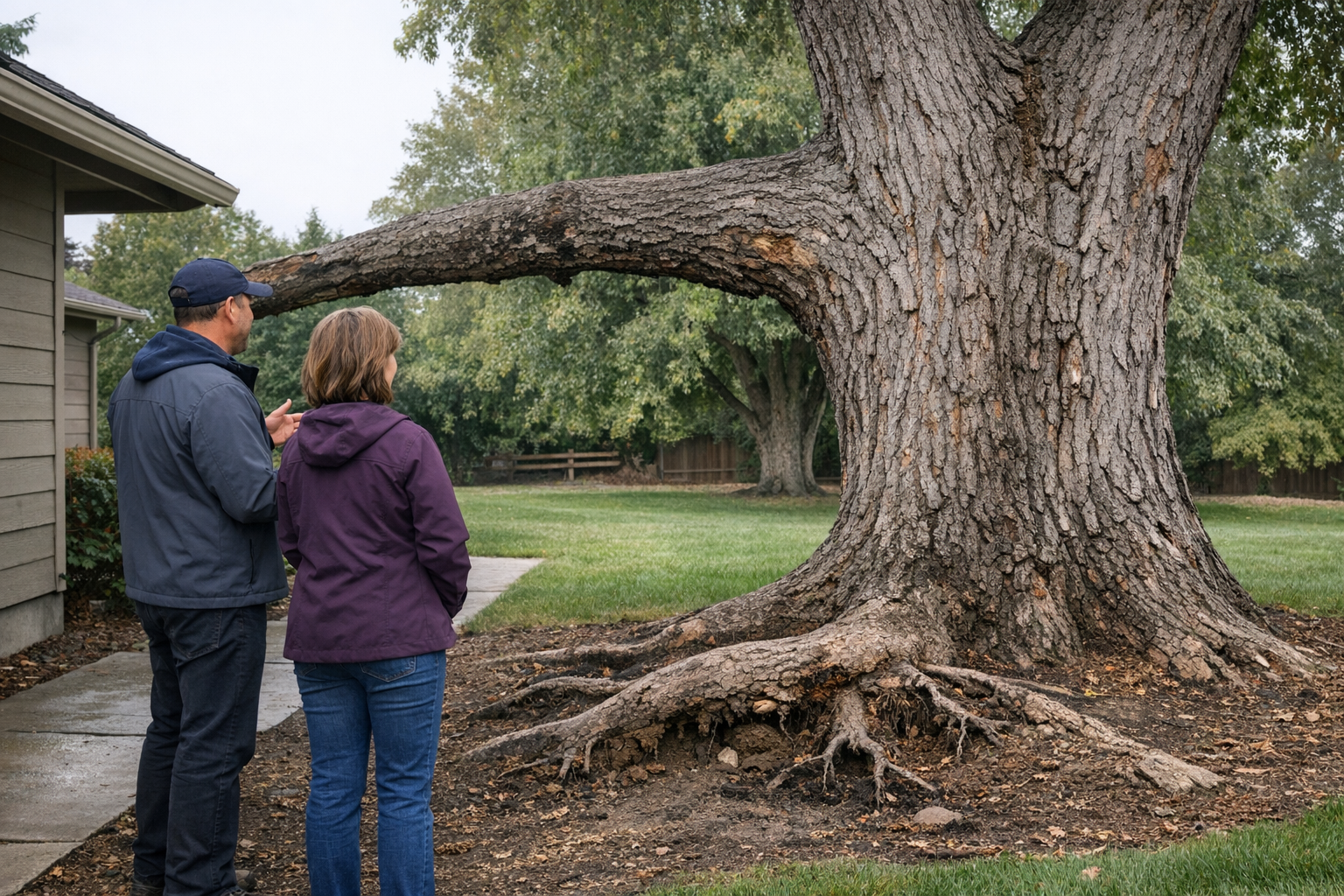
Questions That Reveal the Tree’s Condition and Risk
Begin with the tree itself, then consider everything around it. An assessment is more useful when it connects visible symptoms to the tree’s structure, roots, soil, site conditions, and the people or property that could be affected if a branch or the whole tree failed. You do not need to diagnose the problem yourself. Your role is to ask how the conclusion was reached and what remains uncertain.
What is the likely cause of the decline?
Ask whether the symptoms point toward disease, insects, root damage, soil or moisture problems, weather stress, poor planting conditions, pruning injury, or more than one issue. Similar signs can have different causes, so a diagnosis should not rest on a single symptom. Ask what the assessor observed and whether additional inspection, soil testing, or other evidence is needed before treatment is recommended.
For example, a hypothetical tree with thinning foliage might be reacting to drought, root disturbance, pests, or a structural problem. Those possibilities can lead to very different recommendations. A useful assessment should separate what is known from what is only suspected and explain what information would confirm or rule out each possibility.
What evidence shows that the tree can remain?
If preservation is possible, ask what specific findings support that conclusion. The answer might involve sound trunk wood, stable roots, healthy portions of the canopy, manageable defects, or a site where risks can be reduced. Ask whether the recommendation is based on a visual inspection only and whether hidden decay, root problems, or inaccessible areas limit the confidence of the assessment.
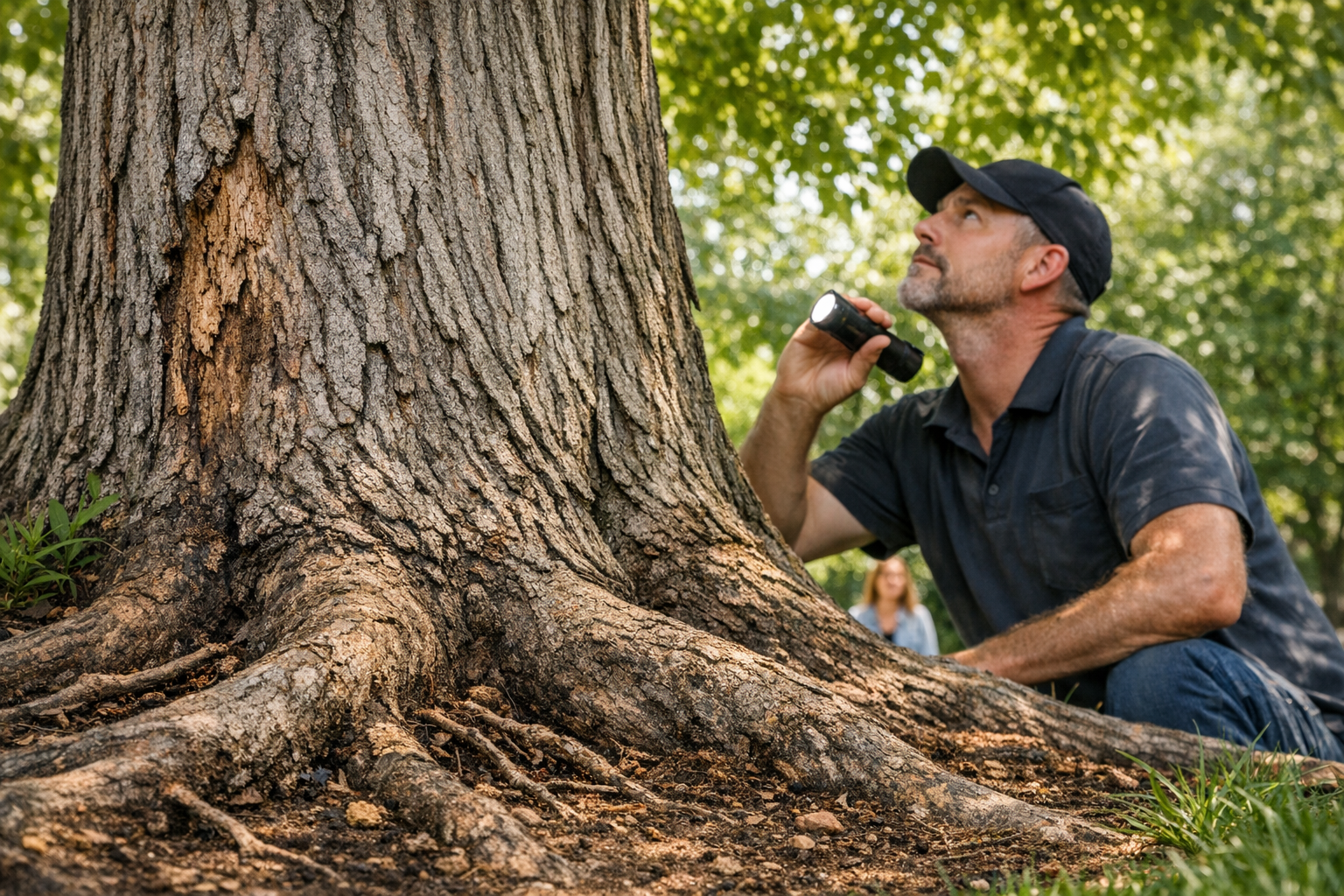
A professional should also explain the tree’s current condition in plain language. Ask which defects are minor, which require action, and which could worsen. A recommendation to keep a tree should include what to watch for and when it should be reassessed. Preservation is not a guarantee that the tree will recover or remain safe indefinitely.
What is the actual risk to people and property?
Ask which parts of the tree could fail, how likely failure may be based on the observed condition, and what could be struck. A dead branch over a low-use area presents a different concern from a cracked limb over a roof, driveway, play area, or walkway. The assessment should account for targets, access, weather exposure, lean, branch unions, trunk defects, root stability, and the consequences of failure.
If there has been storm damage, a new lean, a hanging limb, a trunk crack, or obvious root movement, keep people away from the area and ask for prompt professional guidance. Do not climb the tree or work beneath damaged branches while waiting. When risk cannot be managed through pruning or other care, hazardous tree removal may need to be discussed.
Questions That Turn an Assessment Into a Practical Plan
Once you understand the condition and risk, ask what each reasonable option involves. A good plan should explain the purpose of the work, what result is realistic, how quickly action is needed, and how the recommendation could change if new evidence appears. Request written findings or a clear summary when the decision involves significant cost, safety concerns, or competing options.
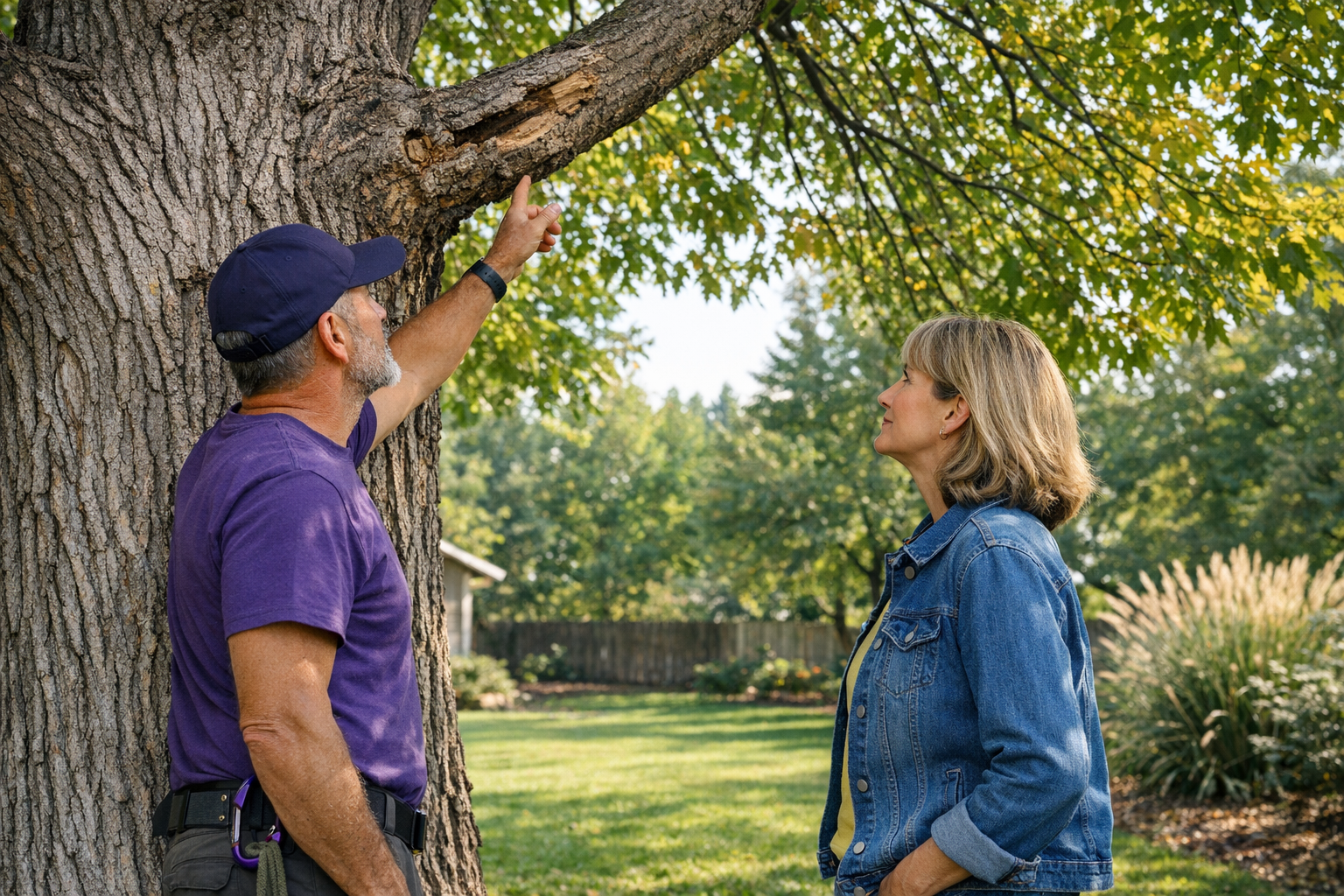
Could pruning, treatment, or monitoring help?
Ask whether the next step is corrective or structural pruning, pest or disease treatment, soil improvement, watering changes, removal of specific damaged limbs, or simple monitoring. Follow up by asking what the work is intended to change. Pruning may reduce a particular defect or improve structure, but it does not cure every underlying problem. Treatment may help with a confirmed issue, but its value depends on accurate diagnosis, timing, tree condition, and site conditions.
2 Rivers Tree & Hardscapes describes tree health care as a proactive process that can include environmental guidance, proper pruning, soil testing and amendments, fertilizing when needed, and appropriately timed applications. Ask which recommendation applies to this tree specifically, what signs would show improvement, and what should happen if the tree does not respond. The company’s Tree Health Care & Diagnostics service can be a useful next step when the cause is unclear.
What is the timeline and prognosis?
Ask whether the tree needs attention now, within a defined period, or simply at a scheduled follow-up. “Monitor it” should not mean ignoring it. Ask what to check, how often to check it, who should perform the next assessment, and which changes should trigger an earlier call. A written timeline can prevent a gradual decline from becoming a surprise safety problem.
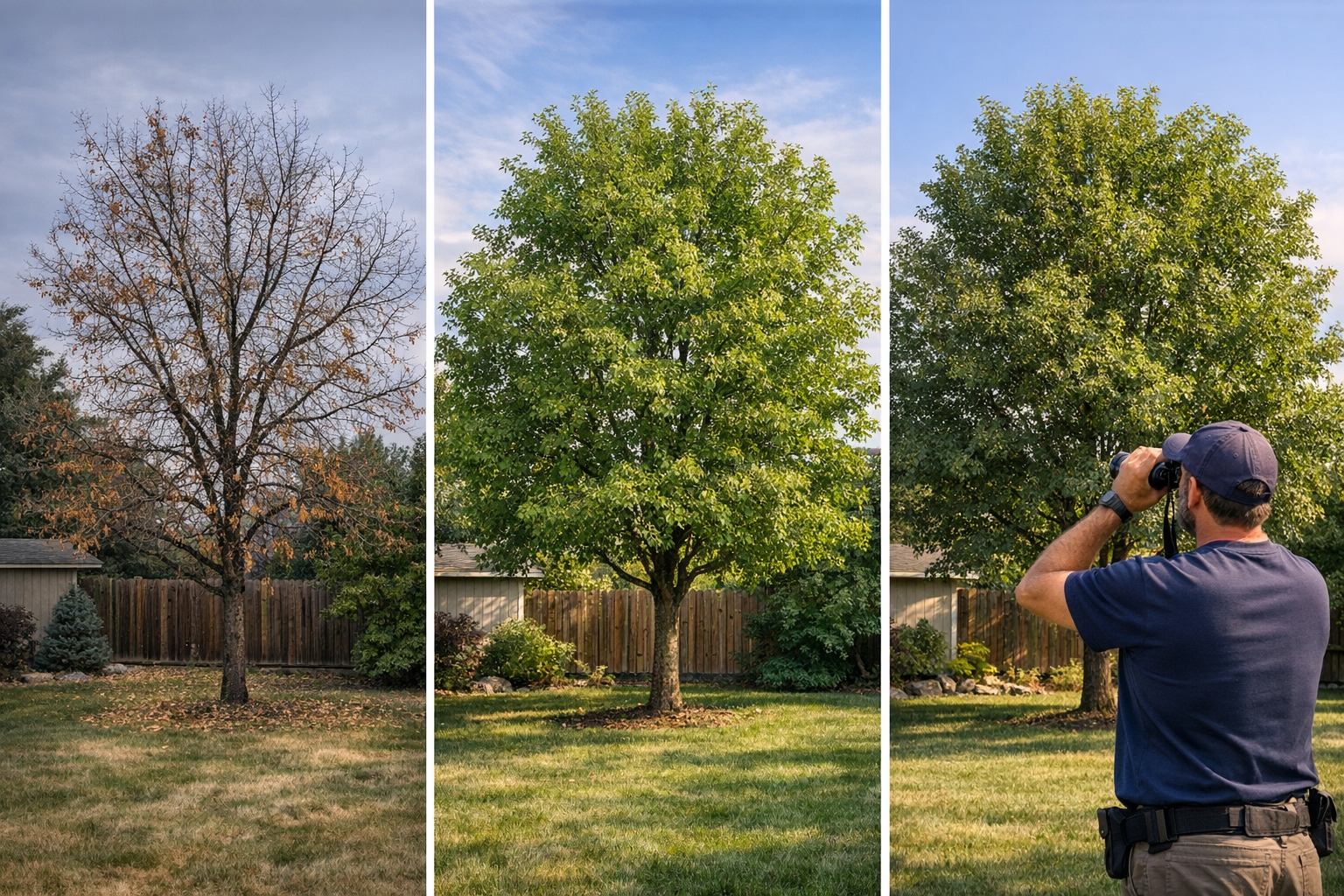
Also ask what recovery would look like. A tree may survive without returning to its former appearance or strength. A realistic prognosis might distinguish between treating the cause, improving vigor, reducing a specific hazard, and restoring the tree completely. If the tree is already severely compromised, ask whether delaying removal changes the risk or limits the available options.
What will each option require and cost?
Ask for the scope of each recommended option rather than requesting one unexplained price. For treatment or pruning, clarify the work included, materials or applications, follow-up visits, cleanup, and conditions that could change the recommendation. For removal, ask whether stump grinding, hauling, and cleanup are separate parts of the plan. Equipment access, tree size, proximity to structures, condition, and the required removal method can all affect a quote.
There is no reliable single price for every tree health or removal project. A proper estimate requires looking at the tree and property. If you compare proposals, make sure each one addresses the same work and explains exclusions. The existing guide on Comparing Tree Removal Quotes in Boise can help you review scope, cleanup, stump work, and possible changes without choosing based only on the total.
If the tree may be hazardous, ask whether the recommended timeline changes the estimate or limits safe work methods. A professional assessment can clarify whether the best next step is care, pruning, monitoring, or removal. When you are ready, contact 2 Rivers Tree & Hardscapes to request an assessment and explain the symptoms, recent weather, property concerns, and changes you have observed.
What should happen after the assessment?
Before the visit ends, repeat the recommendation in your own words and ask what would change it. You might ask, “If we keep the tree, what are we watching for?” or “What finding would make removal the safer choice?” Confirm whether you will receive written findings, photographs, a treatment plan, a pruning scope, or a removal estimate.
Take dated photographs from several angles and keep notes about leaf loss, dead branches, cracks, mushrooms, leaning, drainage, watering, construction, or storm damage. Photos cannot replace an on-site assessment, but they can help document change between visits. If the condition is unclear or the recommendation involves removal, it is reasonable to ask what evidence supports that conclusion and whether another qualified opinion would add useful information.
The goal is not to force every tree into a preservation decision or a removal decision. It is to match the action to the tree’s condition, risk, setting, and realistic prognosis. A careful assessment gives you a clearer path forward and helps prevent avoidable work, delayed safety action, or treatment that does not address the actual problem.
Tree Health Assessment Questions FAQ
Does an unhealthy-looking tree always need to be removed?
No. Depending on the cause, condition, structure, and surrounding risk, a tree may be treated, pruned, monitored, or removed. Ask what evidence supports the recommendation and what changes would alter the plan.
What should I bring to a tree health assessment?
Share when you first noticed the symptoms, recent storm or construction activity, watering changes, prior pruning or treatment, and any photos showing the progression. These details help the arborist understand the tree’s history, although they do not replace an on-site inspection.
What does “monitor the tree” mean?
Ask for specific items to watch, a review date, and warning signs that require earlier action. Monitoring should include a clear follow-up plan rather than an indefinite instruction to do nothing.
How can I compare treatment, pruning, and removal options?
Ask what each option is intended to accomplish, how urgent it is, what evidence supports it, what work is included, and what result is realistic. For removal proposals, also clarify stump work, hauling, cleanup, equipment, exclusions, and conditions that could change the scope.